
Who Should Inspect a Tree Leaning Toward a House?
Learn whether an arborist, tree service, structural engineer, or other professional should inspect
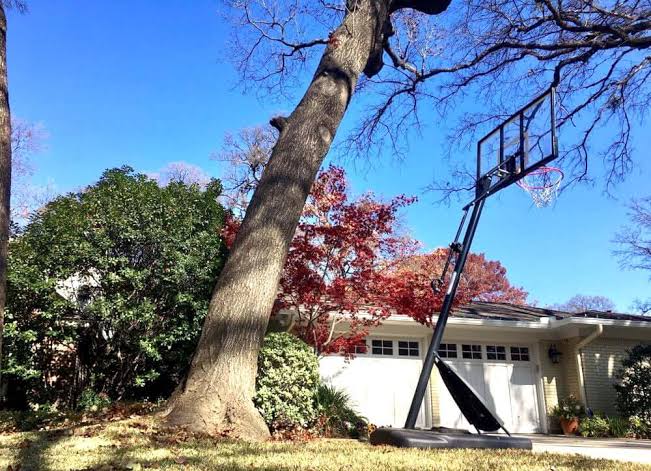
A tree leaning toward a house can be concerning, especially when the lean appears to be getting worse or the tree has recently been exposed to strong winds, heavy rain, snow, soil erosion, or nearby construction.
Some trees naturally grow at an angle and remain stable for decades. Others begin leaning because their roots are damaged, the surrounding soil has shifted, or the trunk has weakened. The difference is not always obvious from the ground.
The first professional to contact is usually a qualified arborist or experienced tree service. They can evaluate the tree’s health, root system, trunk condition, and likelihood of failure. A structural engineer may also be needed if the tree has already damaged the house, is pressing against a structure, or may affect a retaining wall, foundation, or other structural component.
Is a Leaning Tree Always Dangerous?
A leaning tree is not automatically unsafe.
Some trees develop a natural lean while growing toward sunlight or around nearby obstacles. If the trunk, roots, and surrounding soil are stable, the tree may not present an immediate danger.
However, a newly developed or increasing lean can indicate a serious problem.
The level of risk depends on factors such as:
- How quickly the lean developed
- The size and species of the tree
- The condition of the trunk
- The health of the root system
- The direction of the lean
- The distance from the house
- Soil and drainage conditions
- Recent weather events
- Signs of decay or damage
- Whether the tree has enough space to fall
A professional inspection is particularly important when the tree could strike an occupied building, driveway, sidewalk, utility line, or neighboring property.
Who Should You Contact First?
In most cases, the first call should be to a certified arborist or qualified tree service.
An arborist specializes in assessing tree health, structure, stability, disease, decay, and root conditions. They can determine whether the lean is natural, whether the tree is showing signs of failure, and whether pruning, monitoring, support, or removal should be considered.
A tree removal company may also be able to inspect the tree, but the quality of the assessment can vary. Ideally, the person evaluating the tree should have appropriate arboricultural training and experience with hazardous trees.
What Does an Arborist Inspect?
An arborist will generally examine the entire tree and the surrounding site.
The inspection may include:
- The angle and direction of the lean
- Whether the lean is recent or longstanding
- Cracks or splits in the trunk
- Cavities or internal decay
- Dead or broken branches
- Fungal growth
- Root exposure
- Root damage
- Soil lifting around the base
- Changes in ground level
- Previous pruning or storm damage
- Nearby excavation or construction
- The tree’s canopy balance
- The presence of pests or disease
The arborist may also consider the likely consequences if the tree or a major branch fails.
A tree that leans over an open field may present less risk than the same tree leaning over a bedroom, garage, or busy entrance.
When Is a Leaning Tree an Emergency?
A leaning tree may require urgent attention when there are signs that it is actively failing.
Warning signs can include:
- The lean developed suddenly
- The tree moved during a recent storm
- Soil is lifting or cracking around the roots
- Roots are visible or broken
- The trunk has a large split
- The tree is making cracking or popping sounds
- Large branches have recently fallen
- The canopy is unusually sparse or dead
- The base of the trunk is decayed
- The tree is resting against the house
- The tree is contacting utility lines
- The lean is visibly increasing
Keep people, pets, and vehicles away from the potential fall area.
Do not stand beneath the tree or attempt to cut branches yourself. Contact an emergency tree service and the utility provider when power lines or other utilities are involved.
Should a Structural Engineer Inspect the Tree?
A structural engineer generally does not assess the biological health or stability of the tree itself. That is the role of an arborist.
However, a structural engineer may be needed when the tree creates concerns involving the house or other structures.
Examples include:
- The tree is pressing against the roof or exterior wall
- Roots are affecting the foundation
- The tree is near a damaged retaining wall
- A branch has struck the building
- The tree has already caused structural damage
- Removal equipment will be placed near a foundation
- Temporary structural support may be required
- The tree is located beside a garage, deck, or structural slab
- The house shows cracks or movement near the tree
The arborist evaluates the tree. The structural engineer evaluates the building and other structural components.
In some situations, both professionals should be involved.
What If the Tree Is Leaning Over a Retaining Wall?
Trees growing near retaining walls can create more complicated conditions.
The roots may:
- Apply pressure to the wall
- Grow through weak joints
- Interfere with drainage
- Lift nearby concrete
- Contribute to soil movement
- Become exposed as the slope erodes
At the same time, the root system may be helping hold some surface soil in place. Removing the tree without considering the wall and slope conditions could affect the surrounding ground.
An arborist should inspect the tree, while a structural engineer may need to assess the retaining wall. A geotechnical engineer may also be appropriate when there are concerns about slope stability, erosion, or soil movement.
What If the Tree Is Leaning Because of Construction?
Excavation and construction can damage roots or change the soil supporting a tree.
Potential causes include:
- Digging a foundation
- Installing a driveway
- Excavating for utilities
- Regrading the property
- Building a retaining wall
- Removing nearby trees
- Compacting soil with heavy equipment
- Trenching near the trunk
- Changing site drainage
Major roots may extend well beyond the visible trunk. Cutting or damaging them can reduce the tree’s stability, even if the tree initially appears healthy.
An arborist should inspect the tree after significant work near the root zone. A structural or geotechnical engineer may also be needed when the construction affects foundations, slopes, retaining walls, or drainage systems.
Can a Tree Be Stabilized Instead of Removed?
Some leaning trees can be managed without removal, but stabilization is not suitable in every situation.
Possible recommendations may include:
- Monitoring the tree
- Pruning selected branches
- Reducing canopy weight
- Installing cables or braces
- Improving drainage
- Protecting the root zone
- Correcting soil compaction
- Restricting access beneath the tree
Cabling and bracing may support certain branches or weak unions, but these systems do not make every hazardous tree safe. They also require ongoing inspection and maintenance.
The appropriate solution depends on the tree’s condition, location, species, age, and likelihood of failure.
Should You Try to Straighten a Leaning Tree?
Mature trees should not normally be pulled upright without professional advice.
Attempting to straighten a large tree can:
- Damage healthy roots
- Break structural roots
- Split the trunk
- Destabilize the tree
- Damage nearby structures
- Create unsafe tension in cables or equipment
- Increase the risk of sudden failure
Young, recently planted trees may sometimes be corrected using proper staking techniques. Mature trees require a professional assessment.
Can Pruning Make the Tree Safer?
Selective pruning may reduce weight or wind resistance, but improper pruning can make the problem worse.
Removing too many branches from one side may unbalance the canopy. Topping the tree can also encourage weak growth, decay, and future branch failure.
An arborist may recommend:
- Removing dead branches
- Reducing the length of selected limbs
- Correcting uneven canopy weight
- Removing damaged branches
- Improving clearance from the house
Pruning should be based on the condition and structure of the tree, not simply the direction of the lean.
When Is Tree Removal Necessary?
Tree removal may be recommended when the risk cannot be reduced to an acceptable level.
Possible reasons include:
- Severe root damage
- Major trunk decay
- A recent increase in lean
- Broken or lifting roots
- A split trunk
- Extensive disease
- A high likelihood of striking the house
- Inadequate space for safe retention
- Damage that cannot be corrected through pruning or support
- A combination of structural defects
Removal decisions should consider both the likelihood of failure and the possible consequences.
A large tree leaning toward a home may justify removal even when the probability of failure is not certain, particularly when the potential damage could be severe.
How Is a Leaning Tree Safely Removed?
Removing a tree that leans toward a house requires careful planning.
The tree may need to be dismantled in sections rather than felled from the base. Depending on the site, the contractor may use:
- Climbing equipment
- Rigging systems
- A bucket truck
- A crane
- Ropes and lowering devices
- Protective mats
- Temporary barriers
The contractor should consider the tree’s weight, direction of lean, surrounding structures, utility lines, access, and equipment loads.
A structural engineer may need to assess areas where cranes, outriggers, or heavy vehicles will be positioned near foundations, retaining walls, underground tanks, or suspended slabs.
What If the Tree Is on a Neighbor’s Property?
A tree leaning toward your house may be rooted on a neighboring property.
You should document the condition of the tree and notify the property owner in writing. Include clear photographs and recommend that the tree be inspected by a qualified arborist.
Avoid entering the neighboring property or arranging removal without permission.
Responsibility for inspection, pruning, removal, or damage can depend on local law, ownership, the condition of the tree, and whether the owner knew about a hazard.
Legal advice may be appropriate when the owner refuses to address a tree that appears dangerous.
Will Home Insurance Pay for Removing a Leaning Tree?
Insurance coverage depends on the policy and the circumstances.
Homeowners insurance may cover damage after a tree falls, but it does not always cover preventive removal of a standing tree. Some policies may cover limited removal costs when the tree has already damaged an insured structure or blocked access.
Contact your insurance provider to ask about:
- Damage coverage
- Emergency removal
- Preventive removal
- Documentation requirements
- Neighboring trees
- Temporary repairs
- Deductibles and limits
Do not assume that removal will be reimbursed without confirming coverage.
Should You Get More Than One Opinion?
A second opinion can be useful when:
- The recommended removal is expensive
- The tree has significant value
- The risk assessment is unclear
- One professional recommends removal and another does not
- The tree is protected by a local bylaw
- The tree affects neighboring properties
- The work could damage a structure
- The site involves a slope or retaining wall
The second assessment should be completed by another qualified professional with relevant experience.
Do You Need a Tree Removal Permit?
Some municipalities regulate the removal of large, protected, heritage, or significant trees.
A permit may be required when:
- The tree exceeds a certain trunk diameter
- The property is in a protected area
- The tree is located near a watercourse
- The tree is part of a development application
- The property is within a condominium or strata
- The tree is shared with a neighboring property
- Removal could affect a slope or environmentally sensitive area
Emergency removal rules may differ when a tree presents an immediate hazard.
Confirm local requirements before removing the tree unless emergency authorities direct otherwise.
How Often Should a Leaning Tree Be Reinspected?
A tree that is retained may require ongoing monitoring.
The arborist may recommend another inspection:
- After a major storm
- After nearby excavation
- When cracks or decay worsen
- If the lean increases
- After pruning or cabling
- When soil conditions change
- At regular intervals based on the tree’s condition
Take dated photographs from the same location to help identify changes over time.
Monitoring should not replace urgent action when the tree shows signs of active failure.
Who Should Inspect a Tree Leaning Toward Your House?
The best professional depends on the concern:
- Contact an arborist to assess the tree’s health, roots, trunk, branches, and stability.
- Contact a tree service for emergency removal, pruning, or other tree work.
- Contact a structural engineer if the tree has damaged or is affecting the house, garage, foundation, retaining wall, or another structure.
- Contact a geotechnical engineer when the issue involves unstable soil, erosion, or slope movement.
- Contact the utility provider when the tree is touching or threatening power lines.
For many properties, the arborist should inspect the tree first and recommend whether other specialists are needed.
Do Not Ignore a Changing Lean
A longstanding lean may be part of the tree’s natural growth. A new or increasing lean may indicate root movement, decay, soil failure, or storm damage.
The safest approach is to arrange an inspection before the tree falls or causes damage.
Early professional advice may provide more options, including monitoring, pruning, stabilization, or controlled removal. Waiting until the tree becomes an emergency can increase the risk, cost, and complexity of the work.
Arrange a Professional Inspection
Is a large tree leaning toward your house, garage, deck, driveway, or another structure?
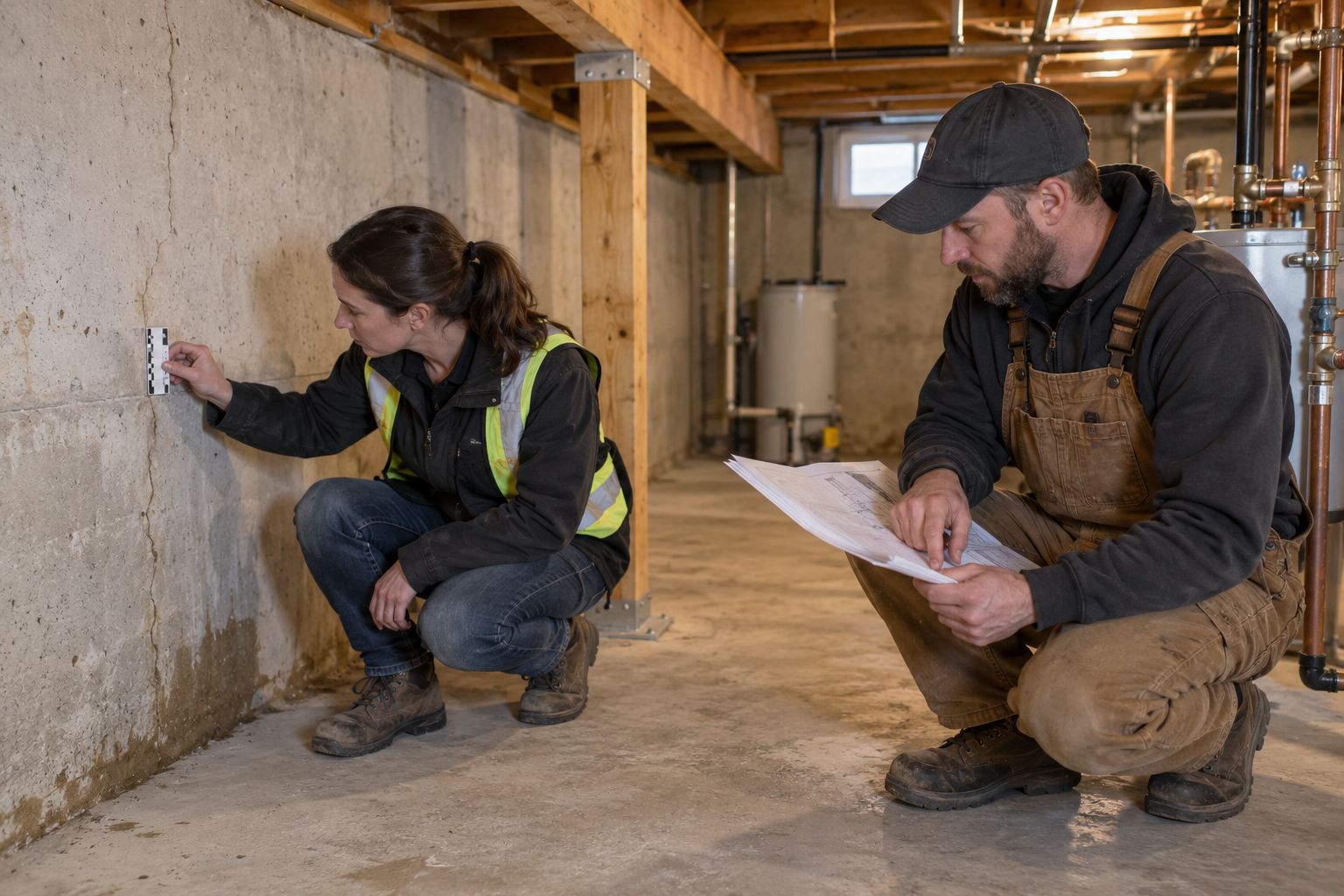
A qualified arborist can assess the condition and stability of the tree. When the house or surrounding structures may be affected, a structural engineer can inspect the property and recommend any necessary protective measures or repairs.
Contact our structural engineering team if a leaning tree has damaged your property or is creating concerns involving your foundation, retaining wall, garage, roof, or other structural components.

Our Services
We provide tailored structural engineering solutions for homeowners, builders, and renovators in Southern Alberta.

